Checking Out How Corporate Philanthropy Shapes Brand Name Track Record and Customer Commitment
Company philanthropy considerably influences brand name track record and client commitment. Firms that participate in authentic philanthropic initiatives often see a favorable shift in just how consumers perceive them. This positioning of values cultivates depend on and emotional links with audiences. Nonetheless, the efficiency of these kind efforts can differ considerably. Recognizing what really reverberates with consumers is necessary for brands looking for to enhance their social effect and market placement. What methods will arise as vital for future success?
The Advancement of Business Philanthropy
As organizations increasingly acknowledge their duty in society, the advancement of corporate philanthropy has changed from plain charitable contributions to a critical component of brand name identification. Initially, business involved in philanthropy primarily for tax benefits or to boost their public photo. In time, this strategy changed as stakeholders-- including financiers, workers, and clients-- required an extra genuine dedication to social duty.
Organizations started straightening their philanthropic campaigns with their core worths and organization goals, resulting in more impactful and thoughtful payments. This modification has actually urged business to invest in sustainable practices and community advancement, promoting a sense of function that resonates with consumers.
Furthermore, technological developments have facilitated openness and involvement, permitting services to display their humanitarian efforts better. Subsequently, company philanthropy has become an integral component of service technique, with companies accepting the opportunity to favorably influence society while improving their overall brand name narrative.
The Impact of Philanthropy on Brand Name Understanding
While firms participate in kind efforts to advertise social good, these efforts greatly form brand name understanding amongst consumers. Company philanthropy can enhance a brand's photo by associating it with favorable social impact and neighborhood participation. Consumers usually regard brands that proactively join charitable tasks as even more trustworthy and responsible. This understanding can affect buying choices, as customers may choose brand names that show a commitment to social problems.

Building Emotional Connections Through Providing
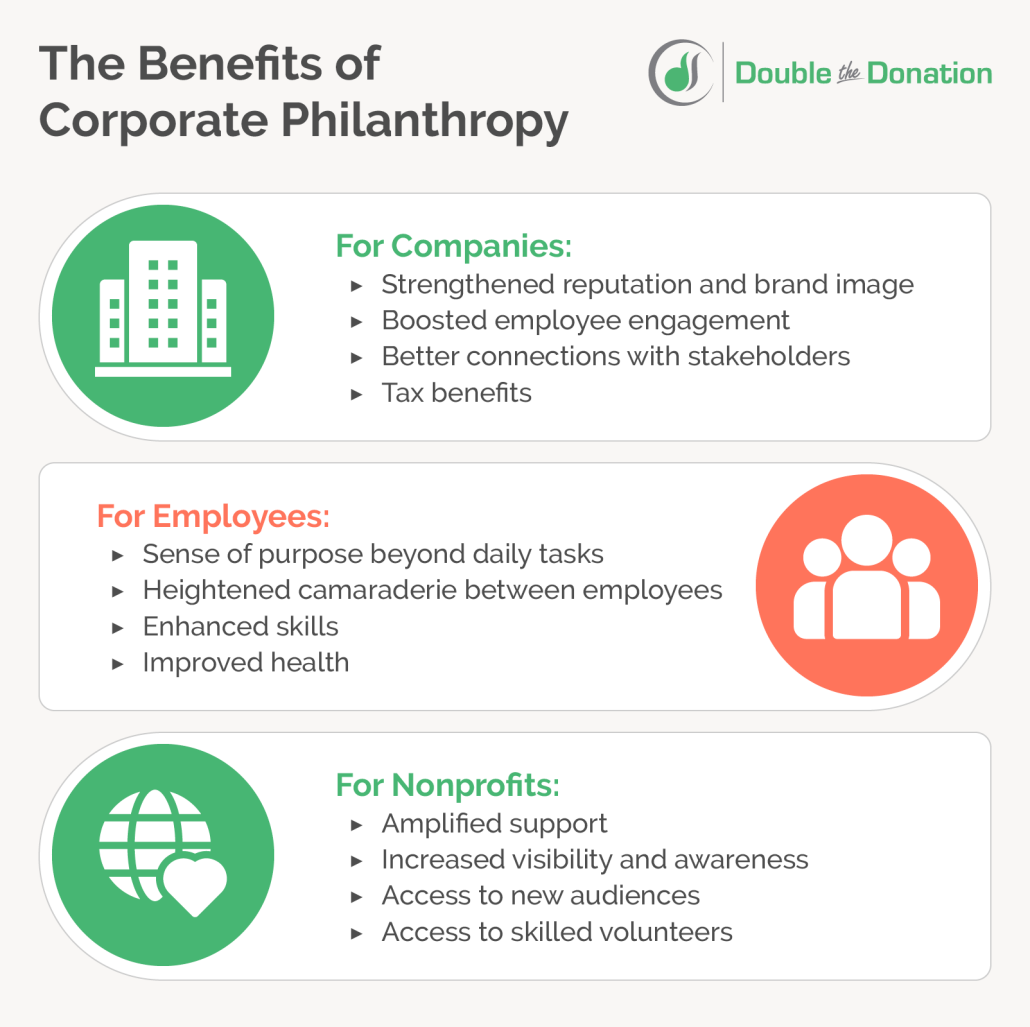
Business philanthropy functions as an effective device for boosting brand identity by linking corporate values with neighborhood requirements. With calculated offering, firms can cultivate community engagement and create shared values that resonate with consumers on a psychological degree. This approach not just reinforces brand name reputation but also builds lasting links in between organizations and their stakeholders.
Enhancing Brand Name Identification
They not only add to social great however also forge much deeper psychological connections with their audiences when firms involve in humanitarian efforts. By straightening their brand name with charitable causes, firms boost their identification and signal values that resonate with customers. This positioning produces a story that surpasses solutions and items, inviting consumers to get involved in a shared mission. As customers progressively prioritize purpose-driven brand names, business that proactively involve in giving can differentiate themselves in a jampacked market. Such efforts foster a feeling of loyalty amongst clients who really feel personally attached to the brand's worths. Eventually, company philanthropy ends up being a vital device for improving brand identification, growing enduring relationships based upon shared beliefs and psychological interaction.
Fostering Area Interaction
Countless research studies show that business participating in community-focused humanitarian campaigns can significantly reinforce emotional links with their stakeholders. By spending in regional tasks and supporting social causes, organizations cultivate a sense of belonging and trust fund within the community. This interaction cultivates a positive brand photo, as customers appreciate business that show genuine issue for social concerns. Additionally, staff members often feel a lot more determined and proud to be related to an organization that prioritizes neighborhood well-being. Therefore, customers are more likely to develop loyalty towards brands that actively contribute to meaningful causes. Ultimately, fostering community interaction with philanthropy not only improves brand credibility however likewise develops long lasting emotional ties that benefit both the company and the community it offers.
Developing Shared Worths
Exactly how can companies efficiently create shared worths that reverberate with their stakeholders? Business can accomplish this by aligning their humanitarian efforts with their core mission and the interests of their areas. By taking part in efforts that attend to regional needs, organizations cultivate psychological connections with customers, boosting brand loyalty. Partnering with non-profits that reflect shared values reinforces the brand name's photo and shows commitment to social obligation. Additionally, transparent communication regarding these efforts permits stakeholders to see the concrete impact of their payments. Ultimately, by incorporating shared worths into their corporate philanthropy, business not only boost their track records but likewise cultivate long-term connections with consumers, leading to increased loyalty and trust. This positioning is important in modern-day consumer decision-making.
Situation Studies: Successful Philanthropic Campaigns
copyrightining successful kind campaigns exposes various methods that boost brand online reputation. Impactful community efforts, cutting-edge partnership designs, and long-term interaction approaches have shown reliable in fostering positive connections with customers. These study highlight the relevance of thoughtful corporate giving in accomplishing both social and organization objectives.
Impactful Neighborhood Initiatives
Lots of firms have successfully leveraged philanthropic campaigns to improve their brand name reputation while making a meaningful effect in their neighborhoods. For circumstances, a modern technology firm launched a digital literacy program in underserved communities, supplying training and sources that encouraged neighborhood homeowners. This campaign not just added to neighborhood advancement however likewise positioned the business as a socially accountable leader. Likewise, a major food company implemented a hunger relief project, partnering with neighborhood nonprofits to disperse meals to households in need. This effort strengthened area connections and promoted consumer loyalty. Through these impactful campaigns, business have demonstrated their dedication to social obligation, efficiently aligning their brand name values with the needs of the areas they offer, ultimately improving their total track record.
Innovative Partnership Models
The success of impactful neighborhood efforts typically rests on ingenious partnership versions that combine diverse stakeholders to deal with complicated social challenges. Instance research studies illustrate exactly how corporations, non-profits, and federal government entities can collaborate effectively. An international corporation partnered with a neighborhood non-profit to introduce an education program, merging resources and know-how to enhance neighborhood proficiency rates. One more instance involved a tech firm and a healthcare company signing up from this source with forces to establish a telemedicine remedy for underserved populations. These partnerships not just intensified the reach of philanthropic initiatives yet also strengthened the brand names' reputations by aligning their objectives with area needs. Ultimately, ingenious collaboration versions function as a catalyst for significant modification and foster more powerful links in between brands and their consumers.
Long-lasting Interaction Approaches
Measuring the ROI of Corporate Social Duty
As business her explanation progressively buy company social obligation (CSR) efforts, understanding the return on financial investment (ROI) connected with these efforts comes to be crucial. Determining ROI in CSR is multifaceted, often incorporating both qualitative and measurable metrics. Monetary returns can be evaluated via boosted sales, enhanced brand name loyalty, and boosted worker spirits, which can cause higher efficiency. Additionally, firms may assess expense financial savings linked to lasting practices, such as lowered waste or energy intake.
Qualitatively, the impact of CSR on brand name reputation can be reviewed through customer perception research studies and social media belief evaluation. Surveys can supply insights into just how CSR activities influence consumer loyalty and count on. Benchmarking versus sector standards can assist companies gauge their CSR effectiveness - corporate philanthropy. Eventually, a thorough method to gauging ROI makes it possible for companies to make educated choices concerning future CSR financial investments, aligning techniques with both monetary efficiency and social influence
Consumer Expectations and Business Obligation
Significantly, customers anticipate companies to operate with a strong sense of business obligation, checking out moral techniques as a requirement for brand name commitment. This change in assumption mirrors an expanding recognition of social and environmental issues, leading customers to favor brands that align with their worths. Customers are extra likely to sustain firms that participate in clear methods, show sustainability, and contribute positively to their communities.
Additionally, social networks enhances these expectations, permitting customers to share their viewpoints and experiences quickly. Brand names that stop working to meet these moral requirements risk reaction, while those that accept corporate duty typically delight in enhanced online reputation and client loyalty. As customers demand responsibility, companies have to integrate company social obligation right into their core methods, prioritizing honest behavior not equally as a marketing method, but as a basic element of their procedures. This alignment can inevitably result in more powerful brand affinity and continual success in open markets.
Future Patterns in Company Philanthropy and Brand Commitment
The landscape of corporate philanthropy is progressing, affected by the increased customer assumptions surrounding business duty. Companies are significantly incorporating social impact right into their core organization techniques, not simply as a secondary activity. Future patterns show a change toward transparency, with brands sharing thorough information about their humanitarian campaigns and their straight effects on neighborhoods.
Innovation is playing an important duty, making it possible for real-time engagement between consumers and brands. Social media platforms help with direct communication, enabling consumers to voice their expectations and hold brands responsible. Furthermore, younger generations, especially Millennials and Gen Z, prioritize sustainability and ethical practices, driving companies to adopt more conscientious approaches.
As corporate philanthropy becomes identified with brand name identification, business that authentically align their objectives with societal needs are most likely to cultivate more powerful client loyalty. This convergence of worths will inevitably form the future of business credibility and consumer partnerships in a significantly diligent market.
Frequently Asked Inquiries
Just How Do Consumers Learn about a Firm's Philanthropic Efforts?
Consumers uncover a business's humanitarian efforts via different channels, consisting of social networks, news release, area occasions, and word-of-mouth. These avenues promote understanding, enabling people to engage with brands that line up with their rate of interests and values.
What Duty Does Employee Participation Play in Business Philanthropy?
Staff member participation in corporate philanthropy improves engagement, cultivates a sense of possession, and strengthens group cohesion - corporate philanthropy. This engagement frequently intensifies the effect of philanthropic initiatives, bring about higher recognition and support for the business's philanthropic efforts
Can Corporate Philanthropy Backfire on a Brand name's Credibility?
Company philanthropy can certainly backfire on a brand name's reputation if viewed as opportunistic or insincere. Unfavorable public assumption may occur, bring about diminished trust fund and loyalty among customers that focus on authenticity in corporate actions.
Are Smaller Sized Firms as Effective in Philanthropy as Larger Corporations?
Smaller firms can be equally effective in philanthropy as larger companies, commonly showing agility and authenticity. Their localized efforts may resonate a lot more deeply with areas, cultivating genuine connections despite limited resources compared to their larger counterparts.
Just How Can Firms Pick the Right Creates to Assistance?
Firms can choose the right trigger by aligning their values with community needs, evaluating stakeholder interests, and assessing prospective effect. This tactical method promotes authenticity, enhances engagement, and strengthens links with consumers and the more comprehensive area.
While business engage in humanitarian efforts to advertise social excellent, these campaigns substantially form brand name understanding among consumers. As consumers increasingly prioritize purpose-driven brand names, business that actively engage in offering can distinguish themselves in a congested market. Numerous companies have efficiently leveraged humanitarian campaigns to enhance their brand name track record while making a meaningful impact look at more info in their areas. Progressively, consumers anticipate business to operate with a solid sense of corporate duty, seeing ethical techniques as a prerequisite for brand name loyalty. As corporate philanthropy ends up being synonymous with brand name identity, firms that authentically straighten their missions with social needs are most likely to foster more powerful client commitment.